Closed project · archived August 23, 2026
SEA2026
A guide to where you could eat like each of the 48 nations in the 2026 World Cup, without leaving Seattle. It ran through the tournament. It is closed now, and this page is what it was.
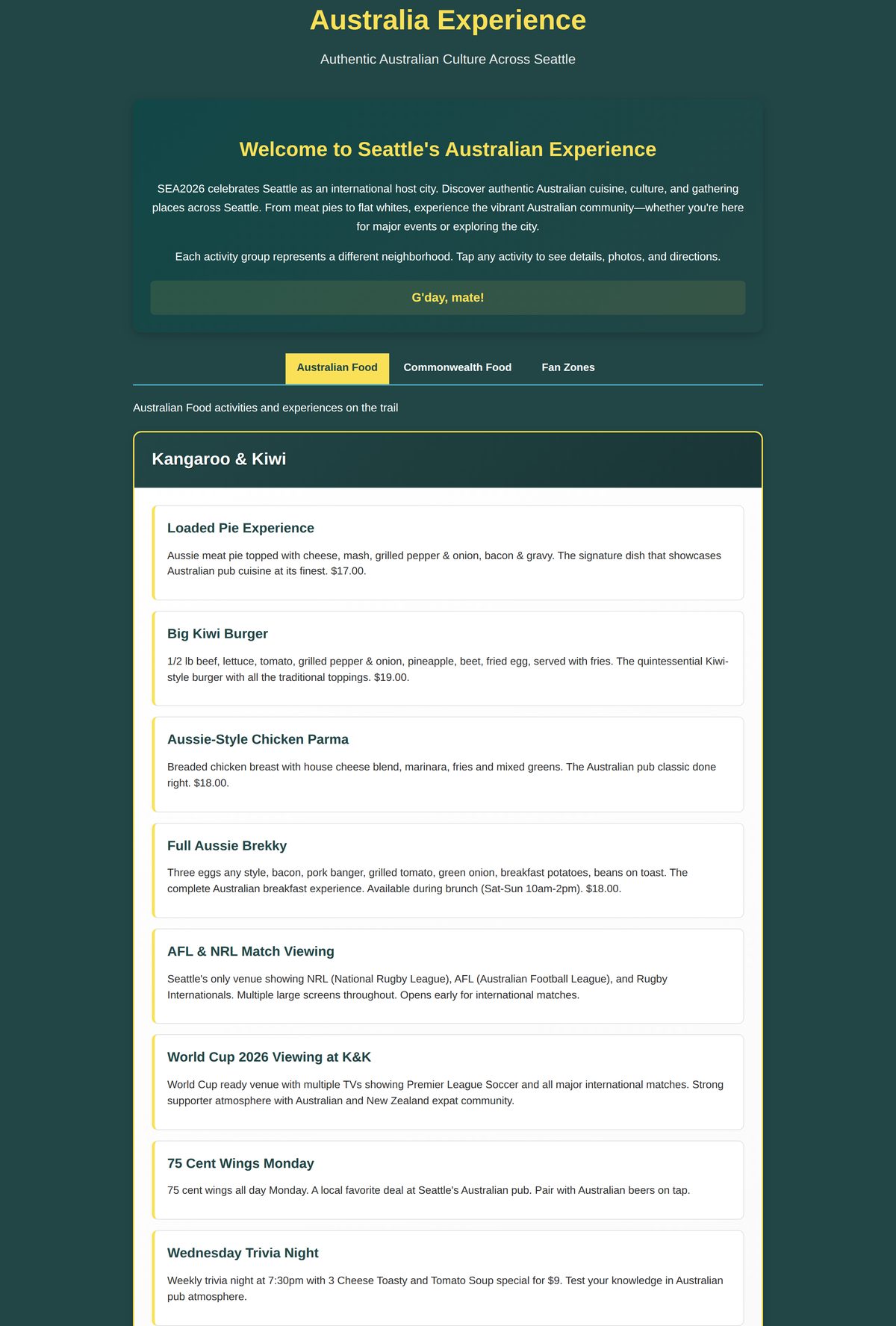
Why the guide itself is gone. It carried prices, opening hours and standing weekly events — a $17 pie here, seventy-five-cent wings on a Monday there. That kind of detail goes out of date fast — restaurants move, close, and change their nights.
What it was
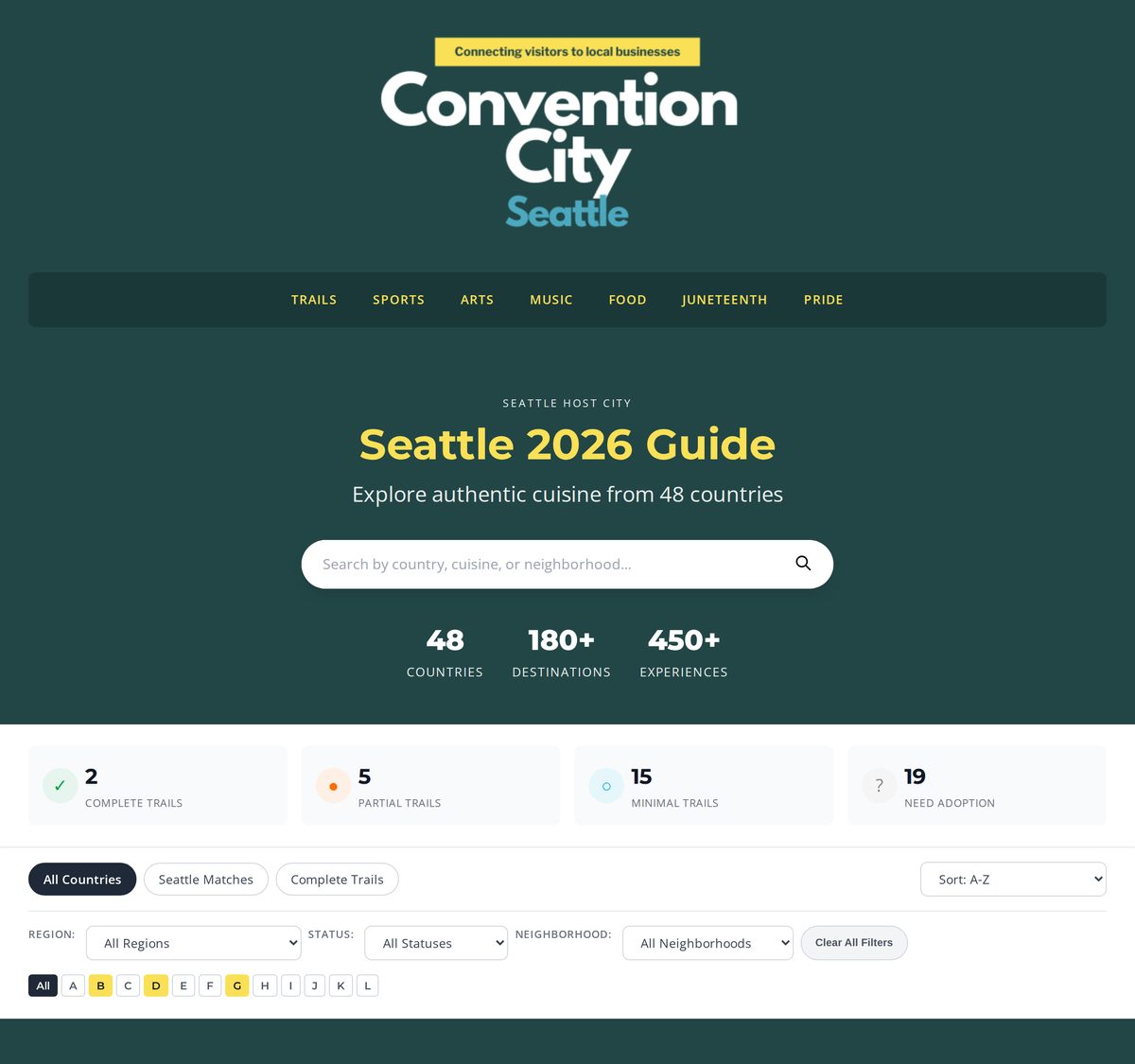
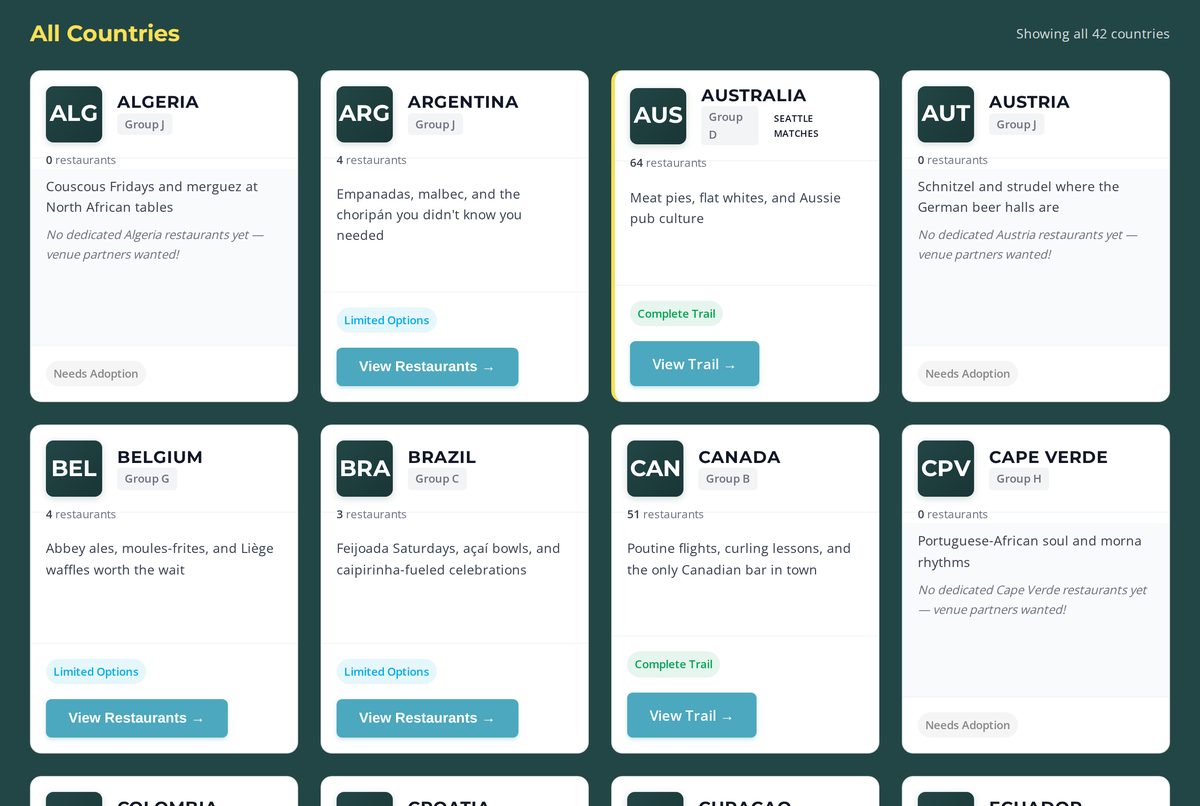
Seattle hosted six matches in June and July of 2026. SEA2026 answered one question for the people arriving: your country is playing here, so where in this city can you eat your own food and watch with your own people? Forty-two of the forty-eight nations got an entry. Each one pointed at real Seattle restaurants, bars and gathering places, grouped by neighborhood, with what to order and what it cost.
What it did
The build was a test of whether one person could produce a city guide at the scale a destination marketing organization produces one, and whether the result would be any good. What made it different from a brochure was that it admitted what it did not have. A country with no dedicated restaurant in Seattle said so on its own card — no dedicated Uruguayan restaurants yet, venue partners wanted — instead of padding the entry with places that were merely nearby. Two trails were finished. Five were partial. Fifteen were thin, and nineteen were marked as needing someone to adopt them.
That last category was the actual idea. Any nation's page could be taken over by somebody who knew that food and those rooms better than the person who built the page. The guide was a frame with the gaps left visible, which is the opposite of how city marketing is normally written.
What came after it
The parts worth keeping turned into neighborhood walks that do not expire with a tournament — a string of stops along the RapidRide G Line through First Hill and Capitol Hill, and the Melrose Loop. Same idea, smaller frame, longer life.
The G Line trails · The Melrose Loop · The Convention City Dispatch